Why Fantasy Stories Feel Emotionally Real for a Better Connection
—
by
Frank Patterson
📅Posted: October 02, 2026
|
🔄Updated: October 02, 2026
|
⏱️Reading Time: 7.00 Min Read
Fantasy stories feel emotionally real because they externalize our deepest internal struggles through metaphor, magic, and mythic structure. When a character battles a curse, grieves a fallen companion, or finds love in a broken world, readers process those emotions as genuine lived experiences. The brain doesn’t fully distinguish between fictional emotional stakes and personal ones.
Why Fantasy Stories Feel Emotionally Real Even In Imaginary Worlds
Something strange happens when you read a great fantasy novel. A character loses someone they love in a world that doesn’t exist, surrounded by creatures that never lived, and your chest tightens. Your eyes sting. You set the book down and stare at the ceiling for a while. That emotional weight isn’t fake. It doesn’t care that the setting has two moons and a sentient forest.
I think about this a lot because I spend most of my time neck-deep in online fantasy communities, web comics, and digital storytelling spaces. The emotional conversations happening in those fandoms are some of the most honest I have seen anywhere on the internet. People aren’t just debating lore. They’re processing grief, desire, loneliness, and hope through fictional frameworks. This article digs into why that works so well, and why it especially connects to how we experience intimacy and emotional vulnerability in our own lives.
☰
Navigate This Article
Table Of Contents For Why Fantasy Stories Feel Emotionally Real
How Fictional Characters Create Powerful Emotional Connections
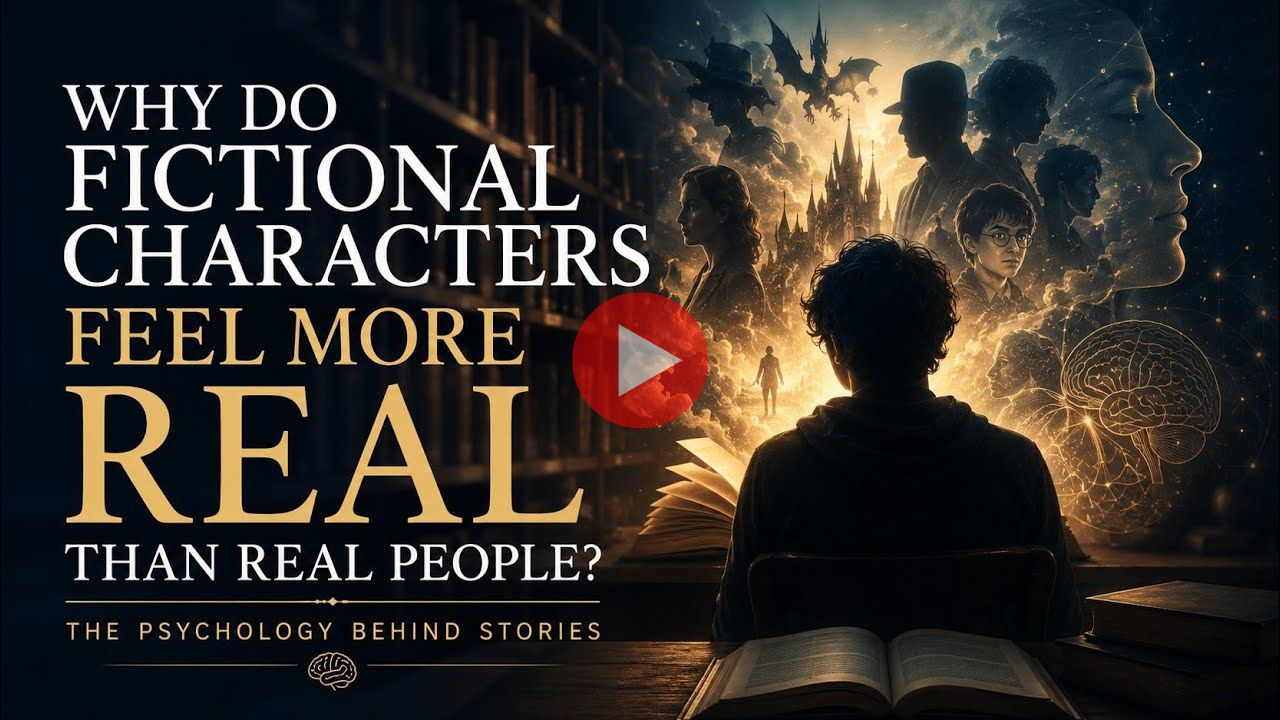
This video explains why fictional characters can feel surprisingly real and emotionally significant. It complements why fantasy stories feel emotionally real by exploring the psychology behind our attachment to stories, characters, and imaginary worlds.
How Fantasy Triggers Genuine Emotion Through Metaphor And Distance
Fantasy doesn’t sneak past your emotional defenses. It kicks the front door open by giving you something impossible to focus on while the emotional truth walks right in. A cursed prince isn’t just a cursed prince. He’s every person who felt trapped by something they didn’t choose. When the stakes are dragons and dark lords, your conscious mind relaxes its guard. And that’s exactly when the story lands its hardest emotional punch. The genre of portal fantasy and isekai plays on this brilliantly, dropping ordinary people into extraordinary worlds where emotional truths hit even harder because the character shares the reader’s sense of displacement.
Metaphor is the engine here. A character who literally carries fire inside her body tells a more visceral story about rage than a literary novel about a woman in therapy. That’s not a knock on literary fiction. It’s just how metaphor operates at a primal level. Fantasy externalizes what we normally keep locked inside. Jealousy becomes a shadow monster. Grief becomes a haunted kingdom. Love becomes a spell that rewrites the fabric of the world. These aren’t cheap tricks. They’re emotional architecture.
Distance plays a critical role too. When you read about a breakup set in modern-day Brooklyn, your brain immediately starts comparing it to your own experience. It judges. It resists. Fantasy removes that comparison instinct. You can’t say “well, that’s not how my divorce went” when the divorce involves a fae queen and a mortal knight separated by a blood oath. That distance paradoxically makes the feeling more accessible. You stop analyzing and start feeling.
The Brain Science Behind Fictional Feelings And Empathic Response
Neuroscience has a pretty clear explanation for why fantasy stories feel emotionally real. Your brain processes fictional events using many of the same neural pathways it uses for lived experience. When you read about a character’s hand trembling as they reach for someone they love, your motor cortex lights up. When a character feels betrayed, your anterior insula activates, the same region involved in processing your own pain. The difference between epic fantasy and sword and sorcery styles can even shape which emotional pathways get triggered, since sweeping world stakes and personal gritty survival engage different kinds of empathic investment.
Mirror neurons deserve part of the credit. These are the neurons that fire both when you perform an action and when you observe someone else performing it. Reading is observation. Detailed, immersive observation. Your brain doesn’t stamp “fiction” on the emotional data it receives from a well-written scene. It processes the sadness, the fear, the arousal, the relief. Fantasy amplifies this because its imagery tends to be more vivid and sensory than realistic fiction. Glowing runes, enchanted forests, and impossible creatures create a richer sensory landscape for your brain to simulate.
There’s also the oxytocin factor. Studies have shown that narrative transportation, the state of being fully absorbed in a story, increases oxytocin production. Oxytocin is the bonding hormone. It’s the same chemical your brain releases during physical intimacy, deep conversation, and trust-building moments. So when you feel bonded to a fictional character, that bond has a biochemical signature. It’s not imaginary closeness. It’s closeness that your nervous system takes seriously.
Emotional Patterns In Fantasy That Mirror Intimacy And Vulnerability
Many fantasy stories feel emotionally powerful because they follow the same relationship patterns people experience in everyday life. Characters earn trust, reveal hidden parts of themselves, and support each other through difficult moments. Those experiences make imaginary worlds feel surprisingly familiar. Nala Jade’s personal stories highlight how honest emotions and vulnerability can create meaningful connections in different forms of storytelling.
My girlfriend once joked that I become more invested in a fantasy romance than a superhero movie. After thinking about it, I realised she had a point. Fantasy gives relationships time to grow through trust, loyalty, and shared challenges. Those emotional journeys often stay with readers because they reflect feelings people hope to experience in their own lives.
Fantasy Story Element
Reader Experience
Why It Feels Powerful
Shared adventures
Readers feel part of the journey alongside the characters.
Important decisions create anticipation and emotional tension.
Readers become curious about the consequences of every choice.
Personal growth
Watching characters mature feels rewarding.
Growth gives readers hope that change is possible.
Emotional setbacks
Failures make victories feel more satisfying.
Emotional contrast creates memorable story moments.
Satisfying resolutions
A meaningful ending provides emotional closure.
Readers leave the story feeling fulfilled instead of disconnected.
Using Fantasy As An Emotional Toolkit For Relationships And Self Awareness
Fantasy stories can make difficult conversations feel easier because they give people shared examples to relate to. A memorable character or scene often expresses emotions that are hard to explain with everyday words. In a similar way, holidays can reignite love and commitment by creating shared experiences that strengthen emotional connection.
My girlfriend and I often compare our moods to fantasy characters, and it usually ends with a laugh before a serious conversation begins. Those playful references help us recognise feelings without making the discussion uncomfortable. Fantasy can become a simple way to understand ourselves while bringing people closer together.
Small Ways Fantasy Can Support Everyday Relationships
💬 Start Better Conversations
Favourite stories often become natural conversation starters.
📚 Share New Experiences
Reading or watching together creates enjoyable shared memories.
✨ Spark Creative Thinking
Imaginary worlds encourage fresh ideas and different perspectives.
❤️ Appreciate Different Viewpoints
Stories expose readers to emotions and experiences beyond their own.
Channeling Fictional Feelings Into Honest Personal Growth
Why fantasy stories feel emotionally real becomes easier to understand when you notice how deeply they influence your thoughts and emotions. A powerful story can inspire empathy, encourage self-reflection, and help you see familiar situations from a fresh perspective. Those emotional reactions often stay with you because they connect to experiences that feel meaningful in everyday life.
Instead of leaving those feelings behind after finishing a book, use them as motivation for personal growth. Think about the characters, choices, or relationships that affected you most and consider why they resonated. Even conversations in fantasy communities show how stories continue to inspire creativity, emotional expression, and stronger connections long after the final chapter.
Bring Fantasy Into Everyday Connection With Chisa
The Realistic Cock Shaped Anal Pleasure Plug by Chisa reflects the same idea explored throughout why fantasy stories feel emotionally real. Fantasy often inspires curiosity, trust, and shared experiences between partners. Introducing imaginative products like this into intimate moments can help transform playful ideas into meaningful connection while encouraging open communication and mutual exploration.
Shop Now! Why Fantasy Stories Feel Emotionally Real for a Better Connection
FAQs About Why Fantasy Stories Feel Emotionally Real
Why do fantasy stories create stronger emotions than some realistic stories?
Fantasy often removes everyday limits and focuses on universal emotions like love, sacrifice, hope, and loss. Those themes help readers connect with characters on a deeper level.
How can I become more emotionally connected to fantasy books?
Choose stories with well-developed characters and relationships instead of focusing only on action. Spending time with longer series also creates stronger emotional investment.
Why do I keep thinking about a fantasy story after I finish it?
Memorable characters, meaningful conflicts, and immersive worlds often stay in your imagination. That emotional connection can continue long after the final chapter.
Can sharing fantasy stories improve a relationship?
Reading or watching fantasy together encourages conversations about characters, values, and emotions. Shared experiences often create enjoyable memories and stronger communication.
How do I choose fantasy stories that leave a lasting emotional impact?
Look for books that balance compelling characters with meaningful relationships and personal growth. Reader reviews often highlight stories that stay emotionally rewarding long after they end.
Frank Patterson
Frank Patterson is the owner of Fantasy Web. He writes about online fantasy culture, web comics, digital storytelling, virtual worlds, creator tools, and the communities that form around them.
To provide the best experiences, we use technologies like cookies to store and/or access device information. Consenting to these technologies will allow us to process data such as browsing behavior or unique IDs on this site. Not consenting or withdrawing consent, may adversely affect certain features and functions.
Functional
Always active
The technical storage or access is strictly necessary for the legitimate purpose of enabling the use of a specific service explicitly requested by the subscriber or user, or for the sole purpose of carrying out the transmission of a communication over an electronic communications network.
Preferences
The technical storage or access is necessary for the legitimate purpose of storing preferences that are not requested by the subscriber or user.
Statistics
The technical storage or access that is used exclusively for statistical purposes.The technical storage or access that is used exclusively for anonymous statistical purposes. Without a subpoena, voluntary compliance on the part of your Internet Service Provider, or additional records from a third party, information stored or retrieved for this purpose alone cannot usually be used to identify you.
Marketing
The technical storage or access is required to create user profiles to send advertising, or to track the user on a website or across several websites for similar marketing purposes.