Why Readers Become Attached To Fictional Characters They Love
—
by
Frikki
📅Posted: October 16, 2026
|
🔄Updated: October 16, 2026
|
⏱️Reading Time: 7.00 Min Read
Readers become attached to fictional characters because stories activate the same emotional circuits as genuine relationships. When you spend hours inside a character’s thoughts, desires, and vulnerabilities, your brain treats that bond as something personal. Empathy, identification, and emotional mirroring create a psychological connection that feels as intimate as any friendship or romance.
Why Readers Become Attached To Fictional Characters
You finish a book at 2 a.m., set it down, and feel genuine grief that a person who never existed is gone from your life. That hollow ache in your chest isn’t weakness. It’s your brain doing exactly what it evolved to do. Fictional characters hijack the same neural pathways you use for every flesh-and-blood relationship. Your mirror neurons fire, your oxytocin rises, and suddenly a collection of paragraphs feels like someone you had missed at a dinner party.
I spend most of my creative life inside Second Life, writing characters who strip themselves bare in every sense of the word. My erotic fiction characters don’t just have bodies. They have insecurities, cravings, and contradictions that make them feel like people I’ve shared a drink with. Readers send me messages about these characters as though they’re mutual friends. They ask about them by name. They worry about them. And honestly, that never stops being fascinating to me. The emotional technology behind fictional attachment is one of the most powerful forces in storytelling, and it deserves a closer look.
☰
Navigate This Article
Table Of Contents For Why Readers Become Attached To Fictional Characters
Why Fictional Characters Stay With Us Long After The Story Ends
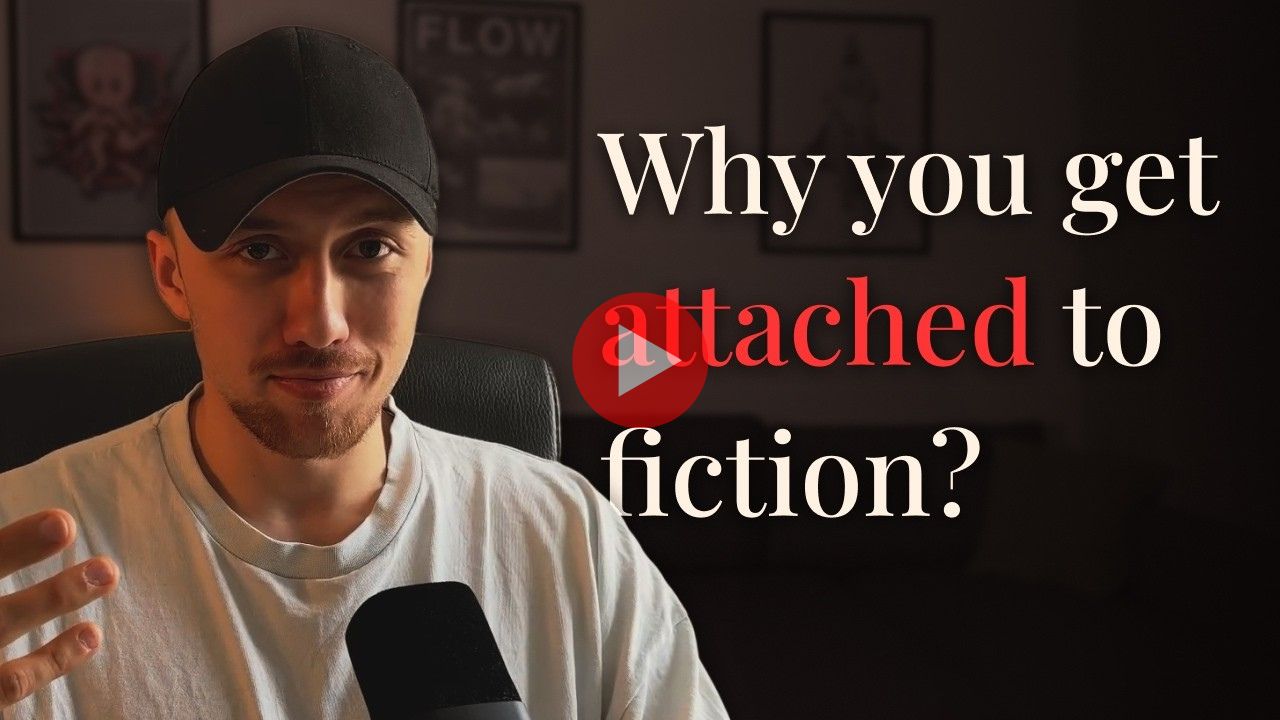
This video explains the psychology behind emotional attachment to fictional characters and why believable personalities leave such a lasting impression. It complements this article by showing how empathy, relatable experiences, and strong storytelling create character bonds that readers remember for years.
How Your Brain Treats Fictional People Like Someone You Know
Neuroscience has a straightforward explanation for why fictional characters feel so alive. When you read about a character’s fear, pleasure, or heartbreak, your brain activates the same regions it uses to process those emotions in yourself. This process is called neural coupling. Researchers at Princeton found that a listener’s brain activity mirrors a storyteller’s brain activity, sometimes even predicting what comes next. Your nervous system doesn’t fully distinguish between a character’s emotional experience and your own.
Mirror neurons play a significant role here. These specialized cells fire both when you perform an action and when you observe someone else performing it. Reading about a character’s trembling hands before a first kiss triggers a faint echo of that same sensation in your body. Add oxytocin release from emotional intimacy in the narrative, and your brain essentially treats the character as a social bond. This is why readers describe missing characters the way they’d miss a friend who moved away. There’s a reason fantasy stories feel emotionally real to so many people. The brain chemistry behind that experience is measurable and consistent.
Parasocial relationships compound this effect over time. The more hours you spend inside a character’s perspective, the stronger your perceived bond becomes. Psychologists originally studied this phenomenon with television personalities. It applies even more powerfully to fiction because novels grant you direct access to a character’s inner thoughts. No real person ever lets you that far inside their mind. That level of intimacy creates attachment faster and deeper than most people realize.
Why Erotic And Fantasy Fiction Creates The Deepest Character Bonds
Erotic fiction often creates strong emotional connections because intimate moments reveal a character’s fears, hopes, and personal struggles. Those scenes help readers feel closer to the people in the story instead of simply watching events unfold. When emotions and relationships are written with care, characters stay memorable long after the final chapter.
Fantasy stories strengthen those connections by placing characters in extraordinary situations that test trust, courage, and personal growth. Magical worlds and unique relationships encourage readers to invest more deeply in each character’s journey. Stories that combine emotional depth with immersive settings, including themes found in portal fantasy vs isekai, often leave the strongest and most lasting impressions.
Story Element
How It Strengthens Reader Attachment
Reader Experience
Emotional Honesty
Characters openly share fears, dreams, and personal conflicts.
Readers empathise and remember emotional turning points.
Meaningful Relationships
Trust, conflict, and affection evolve naturally throughout the story.
Connections feel authentic instead of rushed.
Fantasy Challenges
Extraordinary worlds place characters under unique emotional pressure.
Readers become invested in how characters adapt and grow.
Personal Growth
Characters learn from setbacks and change over time.
Growth creates satisfaction and lasting emotional impact.
Immersive World
Rich settings make every relationship feel more believable.
Readers remain emotionally engaged beyond the final page.
Recognizing The Emotional Patterns That Signal Deep Character Attachment
Many readers only realise how attached they have become after finishing a story. Characters begin appearing in everyday thoughts, favourite scenes stay fresh in memory, and certain conversations continue to resonate long after the final page. Stories that encourage emotional reflection, including erotica for self exploration, often create a deeper personal connection because readers relate closely to the characters’ inner experiences.
That connection can linger for weeks or even years. I still remember a fantasy character whose confidence completely changed how I viewed difficult conversations. My boyfriend once laughed because I kept bringing up one of my favourite fictional scenes during dinner. Moments like that remind me that memorable characters don’t simply entertain us. They quietly influence our perspective and become part of the stories we tell ourselves.
Common Signs You Have Formed A Strong Character Connection
✓
You recommend the same book or series to friends because the characters stayed with you.
✓
You remember character personalities more clearly than plot details.
✓
You imagine what happens to the characters after the story has finished.
✓
You compare new books with stories that created a similar emotional connection.
Turning Fictional Attachment Into Personal Growth And Self Awareness
Character attachment isn’t something to fix. It’s something to use. The emotions a fictional character stirs in you reveal truths about your own unmet needs, desires, and boundaries. If you’re drawn to a character who speaks their mind fearlessly, that pull might reflect your own hunger for assertiveness. If a submissive character’s vulnerability moves you to tears, your body may be telling you something about trust and surrender that your conscious mind hasn’t processed yet. Fiction becomes a mirror when you pay attention to what makes your pulse quicken.
This self-awareness translates directly into intimate relationships. Understanding the five love languages helps explain why certain fictional dynamics resonate so strongly. A character who shows love through acts of service might captivate you because that’s the language you crave but haven’t articulated to your partner. My boyfriend and I had a breakthrough conversation once because I realized a fictional couple’s communication style was everything I wanted from us. I didn’t say “I read it in a book.” I said, “I figured something out about what I need.” Same result, less awkward explanation.
Therapists increasingly recognize bibliotherapy as a valid emotional tool. Reading fiction that mirrors your struggles provides a safe rehearsal space. You watch a character navigate conflict, set boundaries, or embrace a part of themselves they’d been hiding. Then you carry that emotional rehearsal into your own life. Erotic fiction is especially effective for sexual self-discovery because it lets you explore fantasies, kinks, and desires without real world risk. The attachment you feel to characters who take those risks becomes fuel for your own courage.
What To Do When A Character Leaves You Emotionally Wrecked
Post book depression hits harder than most people expect. The story ends, and suddenly the world feels quieter. This happens because your brain needs time to release a bond it treated as real. Don’t mock yourself for the feeling. Give yourself permission to sit with it. Journaling about what drew you to that character helps transform the ache into genuine self-awareness. Write down the scenes that wrecked you and the traits that pulled you in. That small practice turns passive grief into something useful.
Creative expression offers the best bridge back to normal. Write fan fiction, sketch the character, or find community spaces where other readers share the same intensity. Understanding why readers become attached to fictional characters makes the grief feel less strange and more human. Some of my closest friendships started because we both loved the same invented person with ridiculous devotion. We laughed at ourselves first. Then we kept talking for hours and never stopped.
Bring Fantasy Worlds To Life With The Fantasy Play Tentacle Dildo By Bed Candy
Stories often leave readers inspired by imaginative worlds, magical creatures, and unforgettable characters. The Fantasy Play Tentacle Dildo by Bed Candy offers a playful way to celebrate that creativity, pairing a distinctive fantasy inspired design with body safe silicone for those who enjoy bringing a touch of fantasy into their personal collection. It complements the themes of this article by turning imaginative storytelling into a fun expression of fantasy beyond the page.
Shop Now! Fantasy Play Tentacle Dildo by Bed Candy
FAQs About Why Readers Become Attached To Fictional Characters
Why do readers become attached to fictional characters?
Strong storytelling encourages empathy and emotional investment. Spending time with memorable characters often creates a connection that continues after the story ends.
Why do some fictional characters feel more memorable than real people?
Stories often reveal a character’s thoughts, struggles, and growth in ways everyday life rarely does. That deeper insight makes them easier to relate to and remember.
Can emotional attachment to fictional characters improve relationships?
Sharing books, comics, or films often leads to meaningful conversations about emotions, values, and personal experiences. Those discussions can strengthen communication between partners.
How do I enjoy fictional worlds without becoming too emotionally invested?
Balance time spent with stories alongside hobbies, friendships, and everyday experiences. Treat fiction as inspiration instead of a replacement for real life.
What makes one fictional character stay with readers for years?
Well-developed personalities, believable relationships, and meaningful character growth often leave a lasting impression that readers continue thinking about long after finishing the story.
Frikki
Frikki is a part-time Miami resident who writes about erotic fiction, BDSM, exhibitionism, online identity, and life inside Second Life. She also shares her personal stories and views with readers at Adultsmart.
To provide the best experiences, we use technologies like cookies to store and/or access device information. Consenting to these technologies will allow us to process data such as browsing behavior or unique IDs on this site. Not consenting or withdrawing consent, may adversely affect certain features and functions.
Functional
Always active
The technical storage or access is strictly necessary for the legitimate purpose of enabling the use of a specific service explicitly requested by the subscriber or user, or for the sole purpose of carrying out the transmission of a communication over an electronic communications network.
Preferences
The technical storage or access is necessary for the legitimate purpose of storing preferences that are not requested by the subscriber or user.
Statistics
The technical storage or access that is used exclusively for statistical purposes.The technical storage or access that is used exclusively for anonymous statistical purposes. Without a subpoena, voluntary compliance on the part of your Internet Service Provider, or additional records from a third party, information stored or retrieved for this purpose alone cannot usually be used to identify you.
Marketing
The technical storage or access is required to create user profiles to send advertising, or to track the user on a website or across several websites for similar marketing purposes.